Plenty of profitable Amazon businesses run out of cash. The profit is real, but it’s tied up in inventory and in Amazon’s account, while supplier invoices are due now.
This guide covers where cash gets stuck in an Amazon business, how to forecast it and the habits that keep you from a crunch. To model your own numbers, try the cash flow calculator.
Why profit isn’t cash
Follow one inventory order through the business:
- Week 0: you pay a deposit to your supplier.
- Weeks 4 to 8: you pay the balance, plus freight and duties.
- Weeks 8 to 14: the stock arrives and is received into FBA.
- Weeks 10 to 30: units sell, a few each day.
- Every two weeks or so: Amazon closes a settlement and pays you for what sold, minus fees, refunds and any reserve.
You can be out of pocket for months before an order pays itself back. Grow fast and you’re paying for the next, bigger order before the last one has sold.
Where cash gets stuck
- Inventory in transit and in FBA. Usually the biggest use of cash. Slow sellers tie it up longest and add storage fees.
- Amazon’s balance and reserve. Sales sit in your Amazon account until the settlement pays out, and Amazon may hold part of it back as a reserve.
- Advertising. Ad spend is charged as you go, often before the sales it brings in are paid out.
- Refunds and returns come out of future settlements.
Forecast cash, not just profit
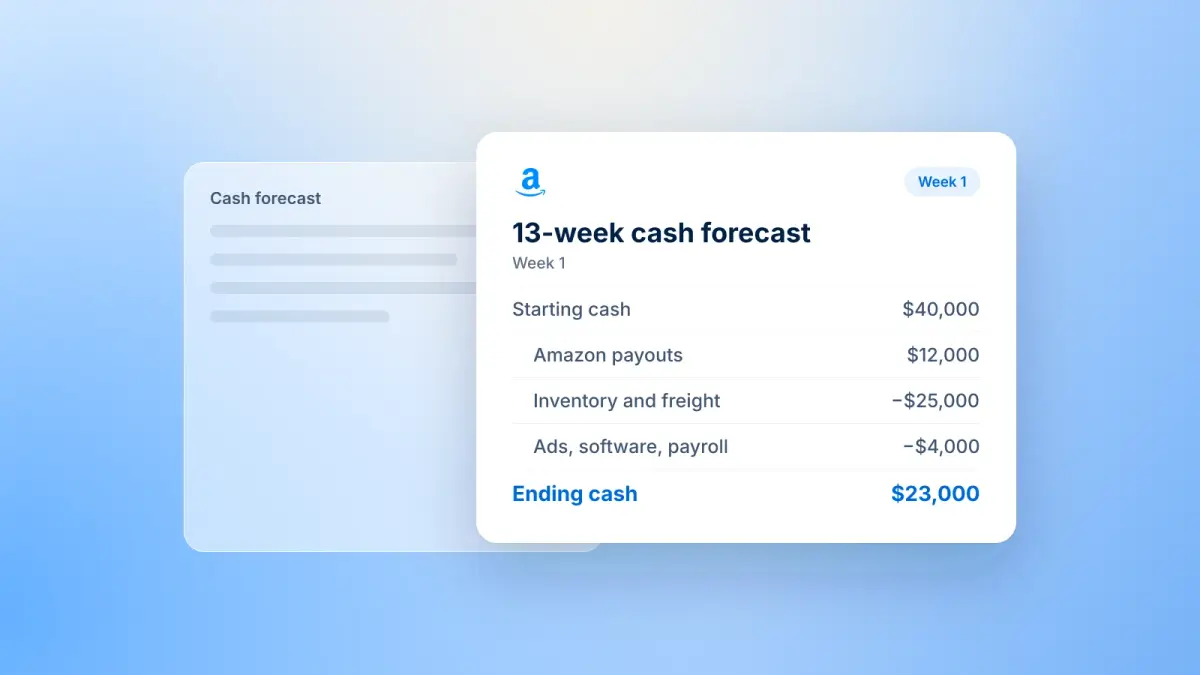
A simple 13-week cash forecast is enough for most sellers:
| Week | Starting cash | Amazon payouts | Inventory and freight | Ads, software, payroll | Ending cash |
|---|---|---|---|---|---|
| 1 | $40,000 | $12,000 | −$25,000 | −$4,000 | $23,000 |
| 2 | $23,000 | $0 | $0 | −$4,000 | $19,000 |
| 3 | $19,000 | $13,500 | −$18,000 | −$4,000 | $10,500 |
Fill in payouts from recent settlements and your sales trend, and outflows from purchase orders and their due dates. When the ending cash dips below your buffer, you know weeks ahead and can move an order, negotiate terms or arrange financing.
Habits that protect cash
- Know your real margin per SKU after fees, ads and landed cost. The Amazon profit calculator helps.
- Order to a reorder point, not by feel. The reorder point calculator uses lead time and daily sales.
- Watch inventory turnover. Slow stock ties up cash and costs storage. See the inventory turnover calculator.
- Negotiate supplier terms. Moving from 100% up front to a deposit and balance on shipment frees cash.
- Keep a buffer for your next order plus a couple of months of fixed costs.
- Close the books monthly. You can’t forecast from numbers you don’t have.
Get cash data out of Amazon settlements
Forecasts are only as good as the numbers behind them. Taxomate posts each Amazon settlement to QuickBooks Online, Xero or Wave with sales, fees, refunds and reserves on separate lines, so your books show where Amazon’s money went and your bank reconciliation stays current. See the Amazon QuickBooks integration.
Disclaimer: This article is general information provided in good faith. It is not financial advice.


